


Even with a comprehensive Medicare Advantage plan, a hospital stay can leave your clients with hefty bills for medical care, groceries, transportation costs to follow up appointments and more.
Hospital indemnity insurance can pay for expenses related to inpatient stays. After a client files a claim, they’ll receive a lump sum cash payment they can use for these expenses.
Here’s why you should carve out a spot for these plans in your portfolio.
Cross-Selling Medicare Advantage Plans with Hospital Indemnity
Many Medicare eligibles are attracted to Medicare Advantage (MA) plans because of their extra benefits and low premiums. While appealing for those reasons, low-cost MA plans can have high copays and high deductibles. They can also have annual out-of-pocket limits as high as $9,250. A tab like that can spell big trouble for seniors who require medical attention.
Even with health insurance, it can be tough for clients to afford hospital payments.
For the U.S., the average length of a hospital stay is about 4.96 days. It can cost thousands of dollars to stay just one night in the hospital. Even with health insurance, it can be tough for clients to afford their payments, especially if they’re living on a fixed income or miss work due to their illness or injury.
What Is Hospital Indemnity Insurance?
Hospital indemnity plans provide a fixed amount of money directly to the beneficiary upon a qualifying event. This predetermined benefit can pay for deductibles, ER visits, observation stays, surgeries, medications, transportation, lodging, health screenings, and more.
Additionally, individuals can add riders to these policies to help pay for cancer, ambulance, or skilled nursing related costs!
If you’re a Medicare sales agent, offering this product is a great way to go that extra mile for clients. It’s truly possible to earn more money selling hospital indemnity insurance. And, one of the greatest things about these plans is that you can sell them year-round!
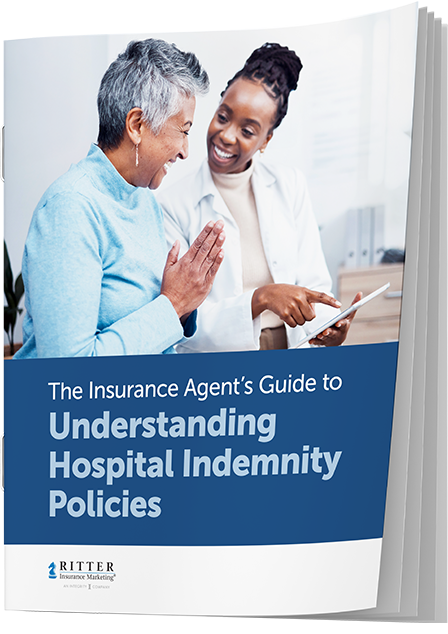
Curious about the nitty gritty of hospital indemnity? Download our guide, The Insurance Agent’s Guide to Understanding Hospital Indemnity Policies to get all the details!
The Medicare Advantage Market Opportunity
Let’s take a look at some statistics. According to KFF:
- 54% of Medicare beneficiaries are in MA plans.
- 96% of MA enrolles are in plans that offer prescription drug coverage.
- 76% of MAPD beneficiaries don’t pay a premium for their plan.
- MA plan enrollees have a weighted average out-of-pocket limit of $5,320 for in-network services and a weight average out-of-pocket limit of $9,547 for out-of-network services (PPOs).
Right now, there are a lot of beneficiaries out there who could benefit from hospital indemnity plans. In 2025, 54 percent of eligible Medicare beneficiaries enrolled in a Medicare Advantage plan, and you should expect to keep meeting people who make excellent prospects for this product.
Is Hospital Indemnity Insurance Worth It for My Client?
People of any age can enroll in this form of coverage, but it’s not a good fit for everyone.
The ideal client for hospital indemnity insurance is someone who’s already in your book of business. Specifically, consider enrollees who have low-premium MA plans. Also look at clients who are on fixed budgets and can’t afford high out-of-pocket costs.
Before making any suggestions to your client, do your research. Compare the benefits of your client’s primary health insurance plan and hospital indemnity plans, and see if he or she stands to gain more in protection than they have to lose in monthly premiums.
A Health Event & the Payout
One day Grace suffered a major health event that required her to take an ambulance to the hospital. The episode kept her in the hospital for four whole days. Due to the copays associated with her Medicare Advantage plan, Grace was responsible for covering $1,000 for her hospital stay and $200 for her ambulance ride, a bill totaling $1,200.
Was the Hospital Indemnity Plan Worth Purchasing?
Grace was retired and living on a fixed income at the time of the event. With her other monthly expenses, she simply wouldn’t have been able to afford an unexpected $1,200 hospital bill without hospital indemnity insurance.
Luckily, Grace had her hospital indemnity plan in place to help her out. It paid her $250 for each day she was inpatient, as well as $200 for her ambulance ride. This totaled $1,200 worth of benefit, leaving her responsible for $0 in copays.
She was totally covered! And since she didn’t have to worry about any financial burden, she could focus on her recovery and getting back to feeling more like herself a little faster.
Are There Any Rules on Selling Hospital Indemnity Plans?
Please note that you cannot sell these plans at a Medicare sales appointment UNLESS your client has checked off the hospital indemnity related box on their Scope of Appointment (SOA) form. Also keep in mind, CMS has reinstated the 48-rule for SOAs.
So, is hospital indemnity insurance worth selling with Medicare Advantage plans? We believe the answer is a resounding yes.
You can provide your clients with a safety net in case of an untimely hospital stay. By offering supplemental options that protect your clients health and financial security, you’re positioning yourself as an agent that cares deeply about their clients.
With Ritter, you’ll have access to our full library of resources and competitive contracts. Additionally, you’ll receive support from a full team of knowledgeable sales specialists who are ready to assist you when you need it! Register with Ritter for free to get started.





Not affiliated with or endorsed by Medicare or any government agency.
Share Post